other
How Yokogawa Electric is Reshaping DCS Reliability Standards with "Edge + Cloud". Dec 20, 2025
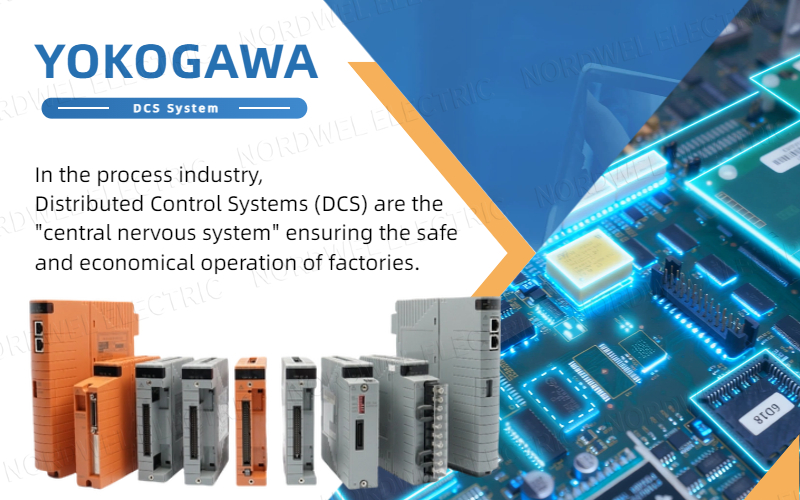
In the process industry, Distributed Control Systems (DCS) are the "central nervous system" ensuring the safe and economical operation of factories. Traditionally, their reliability has been achieved primarily through hardware redundancy, regular maintenance, and strict management. However, with the deepening of digital transformation, reliability faces new challenges: cyberattacks, data silos, and system complexity. As a century-old leader in industrial automation, Yokogawa Electric is redefining DCS reliability—from passive fault response to proactive prediction and intelligent resilience systems based on "edge computing + cloud."

The Evolution of Reliability Concepts: From "Fault Protection" to "Predictive Resilience"
Traditional DCS reliability is based on four core concepts: fault prevention, fault-safe/mitigation, fault-tolerant operation, and online maintenance. Yokogawa Electric, while inheriting these core ideas, elevates them to a new level. Modern reliability is no longer just about hardware not failing; it requires systems to anticipate risks, adapt to changes, and recover seamlessly. This signifies a shift from static "robustness" to dynamic "intelligent resilience," a new connotation of reliability in the Industry 4.0 era.

Edge + Cloud Architecture: Building a Three-Layer Defense for Next-Generation Reliability
Yokogawa Electric has constructed a three-dimensional defense for reliability through an innovative field-edge-cloud collaborative architecture:
Field and Control Layer: Critical real-time controls (such as CENTUM VP R6) are still deployed on a highly reliable, deterministic platform, ensuring millisecond-level response, fault-tolerant operation, and fault safety—the cornerstone of reliability.

Edge Intelligence Layer: This is the "intelligent frontline" of reliability.

Edge devices act as local "guardian nodes," performing real-time data processing and lightweight AI analysis. It can provide early warnings of potential faults (proactive prevention) and maintain autonomous operation during temporary network outages (advanced fault mitigation), significantly improving system autonomy.


Cloud Insight Layer: The cloud platform provides cross-plant data aggregation, advanced AI model training, and global performance management. It upgrades reliability management from a single-point, reactive approach to a global, forward-looking strategic function, optimizing reliability design and decision-making throughout the entire lifecycle.

Intelligent Upgrades Based on Four Key Concepts: How Edge and Cloud Specifically Empower Performance
This architecture substantially enhances classic reliability dimensions:
Upgraded Fault Prevention: Predictive models trained in the cloud (e.g., for pump vibration, heat exchanger fouling) are deployed to the edge, enabling state-based predictive maintenance to prevent problems before they occur.
Intelligent Fault Mitigation: In the event of anomalies, the edge system can automatically execute optimized degradation operation plans or local safety protocols, intelligently limiting the impact scope compared to traditional hard shutdowns.
Extended Fault Tolerance: The architecture itself possesses network fault tolerance capabilities. Even if cloud connectivity is temporarily interrupted, the edge layer can ensure the continuity of critical control and analysis, achieving fault tolerance at the communication layer.

Optimized Online Maintenance: The cloud platform provides a unified health status dashboard, enabling maintenance teams to accurately plan online maintenance activities based on actual equipment conditions, improving efficiency and safety.


Practical Results: Reliability Transformed into Quantifiable Operational Value
Plants adopting Yokogawa's strategy have reaped significant rewards:
Reduced Unplanned Downtime: Edge predictive alerts drastically reduce unplanned downtime, shifting maintenance from reactive to proactive monitoring.
Enhanced Safety Margin: Continuous intelligent monitoring of safety instrumented systems and process parameters provides earlier warning windows, strengthening safety safeguards.
Enhanced Operational Agility: Global cloud visibility enables the rapid replication of best practices and optimized operating models across multiple sites, improving overall operational efficiency and consistency.

People-Centric Approach: Reliable Systems Empower Reliable Teams
Technology ultimately serves people. Yokogawa's platform provides engineers and operators with actionable insights, not just a deluge of data. Reliable real-time data from the edge supports rapid, confident decision-making by field personnel. Cloud-supported remote collaboration tools enable experts to provide online maintenance support across multiple locations, building and transferring organizational knowledge, and strengthening the crucial "people" layer in reliability.

Conclusion
The continued leadership of a century-old company lies in the constant reinvention of its core technologies. In the critical area of DCS reliability, Yokogawa Electric, through its "edge + cloud" collaborative architecture, is leading a paradigm shift from "high availability" to "high intelligent resilience." This is not merely a technological upgrade, but an evolution of its reliability philosophy. It ensures that process industries can build a more forward-looking, adaptive, and robust operational defense in an increasingly complex digital age, elevating safety and efficiency to new levels.
Mesaj bırakın
Ürünlerimizle ilgileniyorsanız ve daha fazla ayrıntı bilmek istiyorsanız, lütfen buraya bir mesaj bırakın, size en kısa sürede cevap vereceğiz.
Göndermek

Mesaj bırakın

Mesaj bırakın
Ürünlerimizle ilgileniyorsanız ve daha fazla ayrıntı bilmek istiyorsanız, lütfen buraya bir mesaj bırakın, size en kısa sürede cevap vereceğiz.

Ev

Ürün:% s

İletişim

whatsapp